Products Description
How to safely load oxygen-sensitive or moisture-sensitive materials into a reactor?
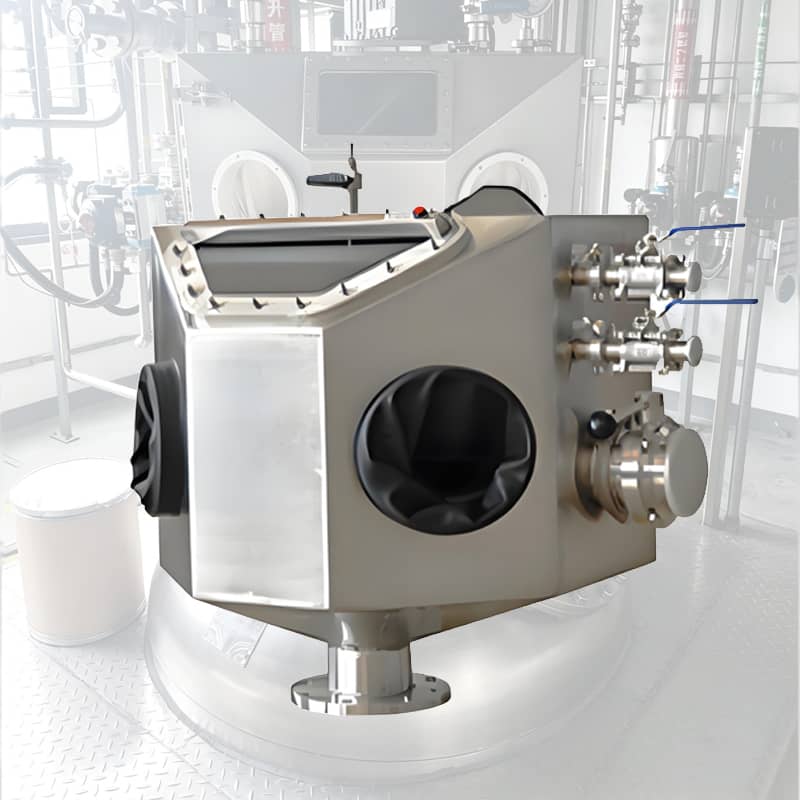
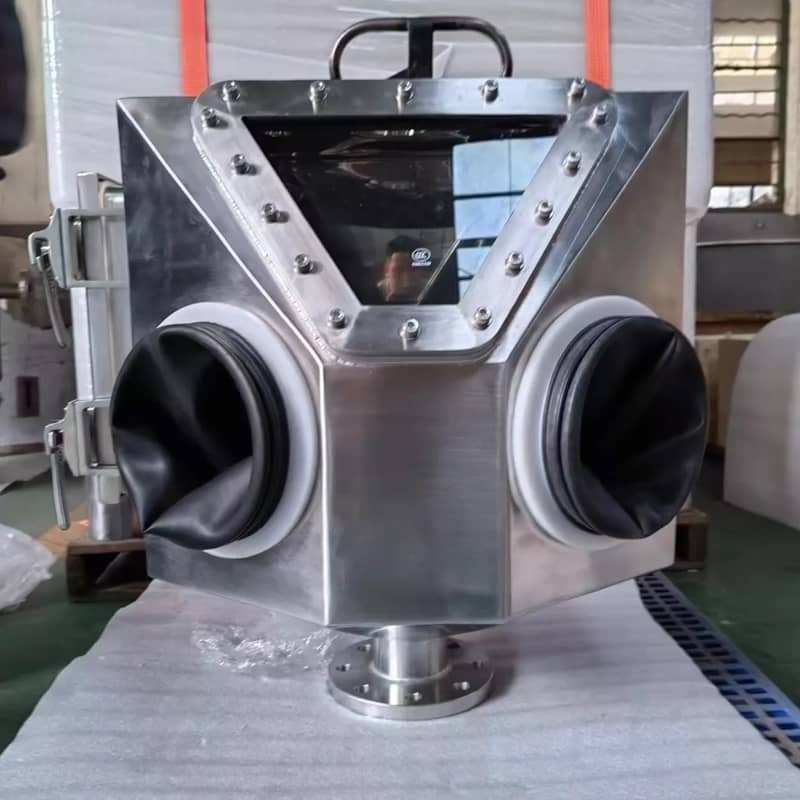
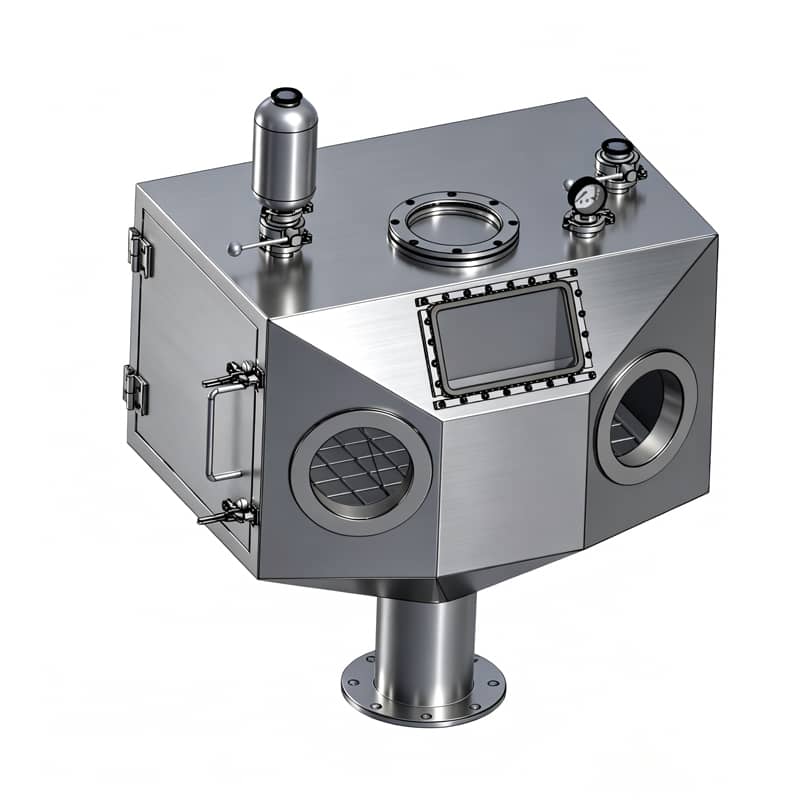
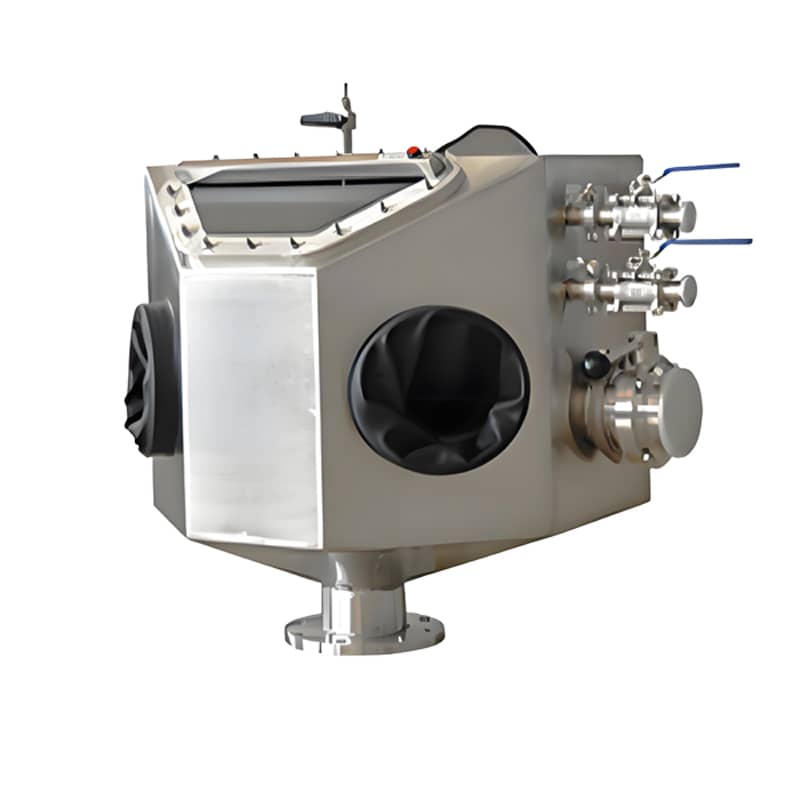
Guanjiang's Reactor Glove Box Feeder creates a fully enclosed, oxygen-free and moisture-free environment for material handling. Constructed from 316L stainless steel with internal electropolished surface (Ra<0.4μm), the unit integrates a viewing window, N? purge port, cleaning inlet, and pressure gauge connection. Materials can be opened, weighed, and transferred inside the glove box, then discharged directly into the reactor via the bottom flange — completely isolated from air and humidity.
Key Advantages
Maintains an inert atmosphere via N? purge. Prevents oxidation, hydrolysis, and degradation of sensitive materials during reactor charging.
Chamber constructed of 316L stainless steel with internal electropolished surface (Ra<0.4μm). No dead corners, no material residue — ideal for high-purity applications.
Includes viewing window, exhaust port, cleaning inlet, pressure gauge port on top, plus N? purge port and bag discharge port on the side — all sanitary quick-connect fittings.
Bottom discharge flange (DN100 PN16) connects directly to reactor inlet. Materials fall by gravity through a valve — zero exposure to atmosphere.
Technical Specifications (Standard Model)
| Parameter | Specification |
|---|---|
| Chamber Dimensions | 800×600×600 mm (custom sizes available) |
| Front Panel Material | Transparent acrylic (clear visibility) |
| Chamber Material | 316L Stainless Steel |
| Internal Surface Finish | Electropolished to Ra<0.4μm, no dead corners |
| Glove Ports | Anti-disconnect locking device |
| Left Door Opening | 500×470 mm (quick-open) |
| Bottom Discharge Port | DN100 PN16 flange |
| Top Ports | φ100 viewing window, DN40 exhaust, cleaning inlet, DN20 pressure gauge port, lifting hooks |
| Right Side Ports | DN40 N? purge (top), DN200 PN10 bag discharge port (bottom) |
Customization Available:
The standard model can be fully customized based on your reactor specifications, available space, and process requirements — including chamber size, port types/positions, number of glove ports, and additional features. Contact us with your requirements for a detailed proposal.
Frequently Asked Questions
Q1: How is the oxygen-free / moisture-free environment achieved?
A: Connect high-purity nitrogen (or argon) to the DN40 N? purge port. Before operation, close all valves and purge the chamber while opening the exhaust port. After 2-3 replacement cycles, oxygen and moisture levels drop to near zero. An optional online oxygen analyzer can be added for monitoring.
Q2: How do you clean the glove box feeder?
A: The top-mounted cleaning inlet (sanitary quick-connect fitting) allows connection to a CIP line for spray cleaning. The internal surface is electropolished to Ra<0.4μm, preventing material adhesion. For sterile applications, steam-in-place (SIP) can also be accommodated.
Q3: How does the feeder connect to the reactor and transfer materials?
A: The bottom DN100 PN16 flange bolts directly to the reactor inlet flange. A butterfly valve or ball valve is installed between them. Operation steps: (1) Load material through left door, (2) Close door and purge, (3) Open bottom valve to discharge material by gravity into reactor, (4) Close valve — fully enclosed transfer with no exposure.
Q4: Can the operation inside the glove box be observed clearly?
A: Yes. The front panel is transparent acrylic, and the top includes a φ100 viewing window. Operators can clearly see the material status and handling process. The glove ports feature anti-disconnect locking devices for safety.
Need a glove box feeder for your sensitive reactor charging process?
Request a Quote → Download Datasheet (PDF)* Please provide your reactor flange size, material characteristics (oxidation/moisture sensitivity), and chamber size requirements for a custom solution.